Case Study: Emergency Systems & Information Flows during the 19S Earthquake
“Technology doesn’t solve underlying relational problems, but it provides the fabric that enables self-organization when traditional structures are overwhelmed.”
Project Overview
A transdisciplinary research project analyzing social media behavior following the September 19, 2017, earthquake in Mexico City. This study explores how civil society transitioned from linear, top-down communication to a reticular, self-organized network to manage emergency relief.
The Challenge: Information Collapse & Uncertainty
In disaster scenarios, high uncertainty drives an urgent search for information. During the "19S" event, the lack of official digital protocols and institutional distrust created a vacuum. This gap was filled by civil society through role improvisation and the intensive use of Twitter.
The Issue: Overcoming the "Mass Informal Assault" of unverified data and volunteers that can hinder official rescue efforts.
The Hypothesis: Society organized to take leadership, but did so independently of formal government disaster management nodes.
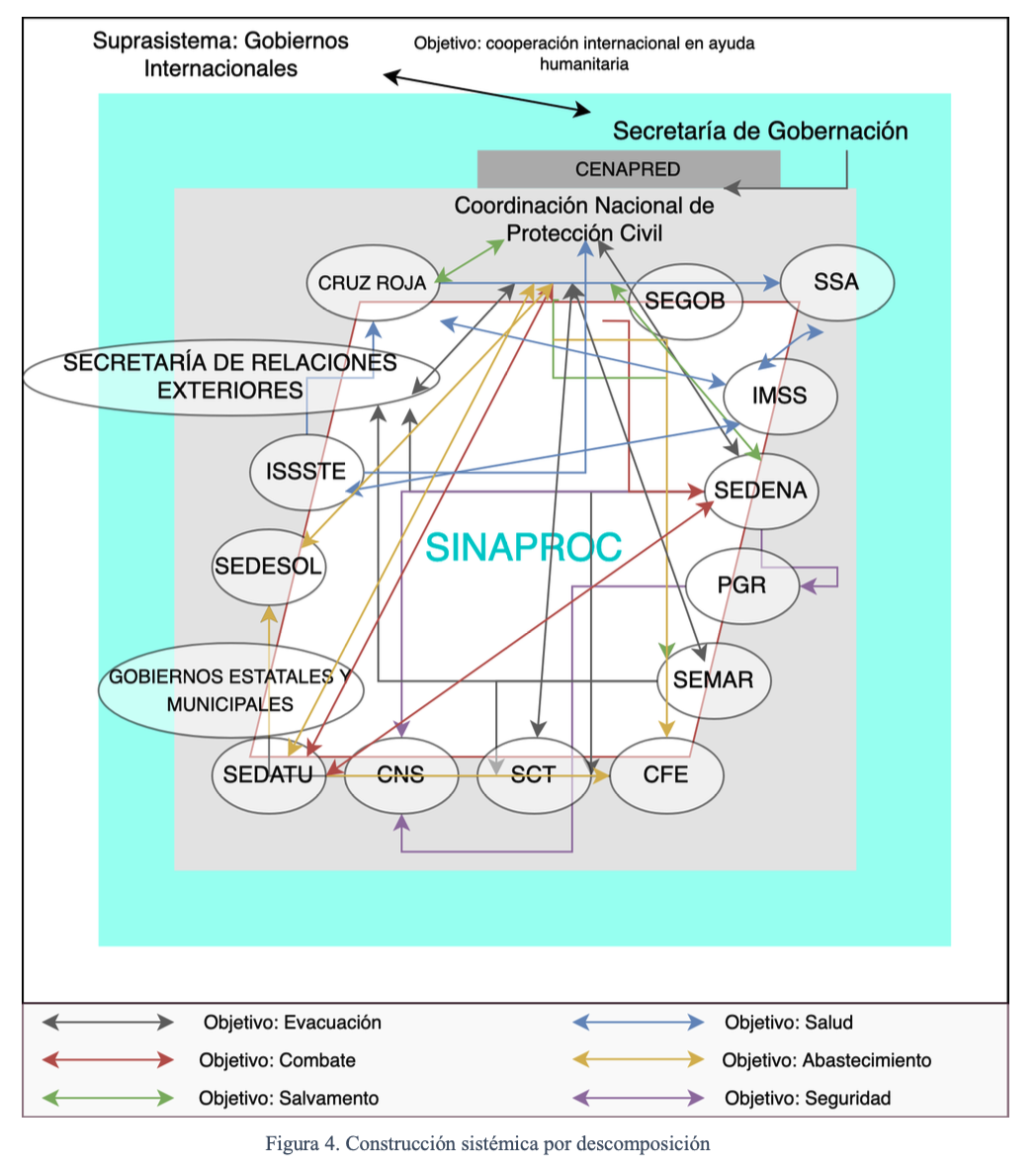
The Solution: A Complex Systems Approach
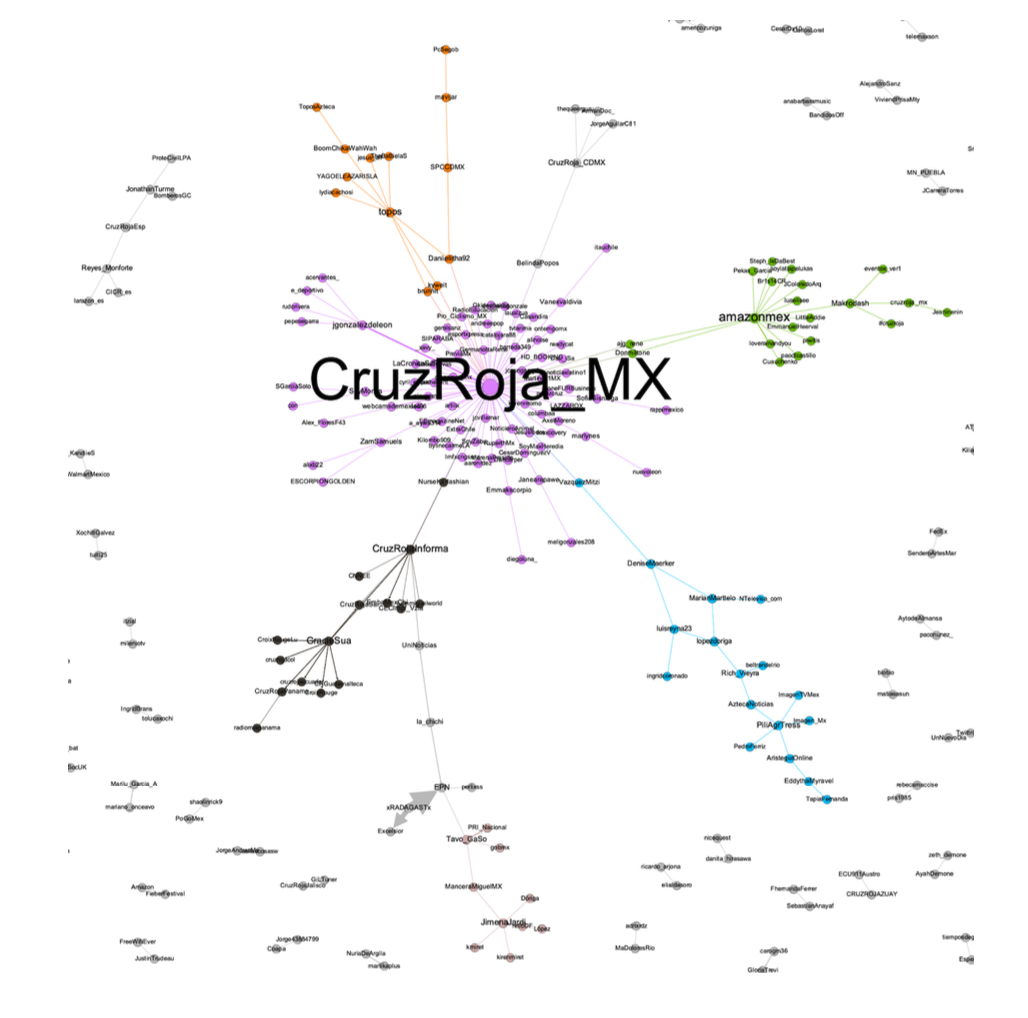
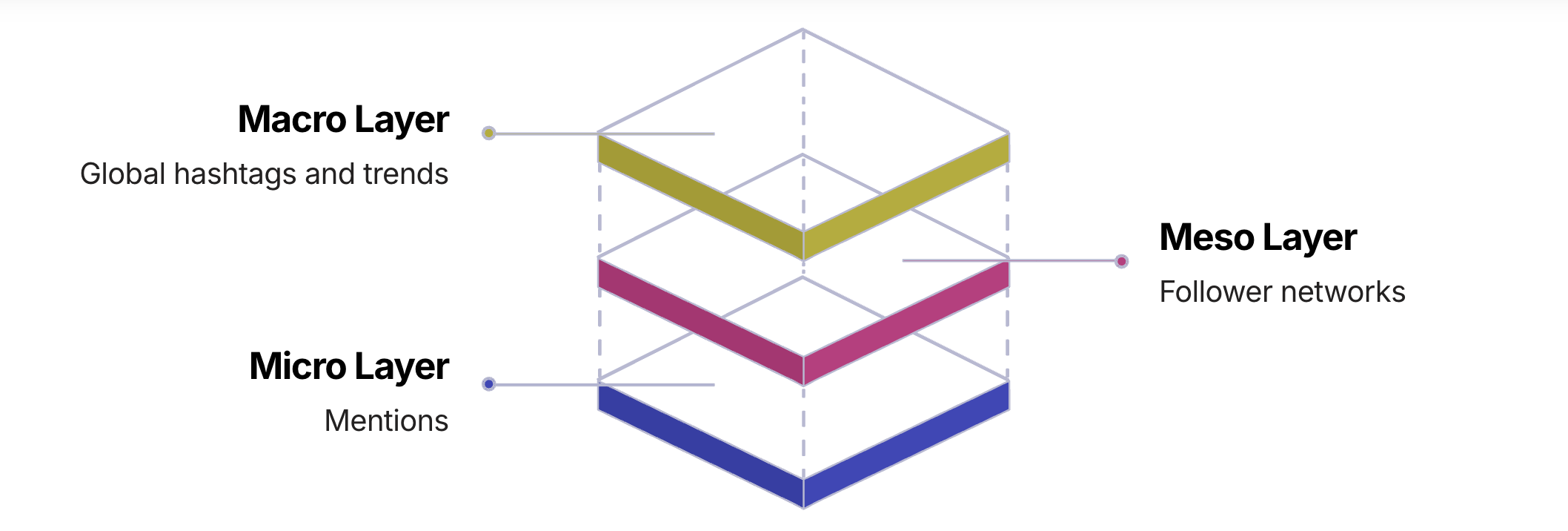
Using the Complexity Theory paradigm, I analyzed Twitter not just as a media channel, but as a Complex Adaptive System. The research focused on three communication levels: Micro (mentions), Meso (follower networks), and Macro (global hashtags and trends).
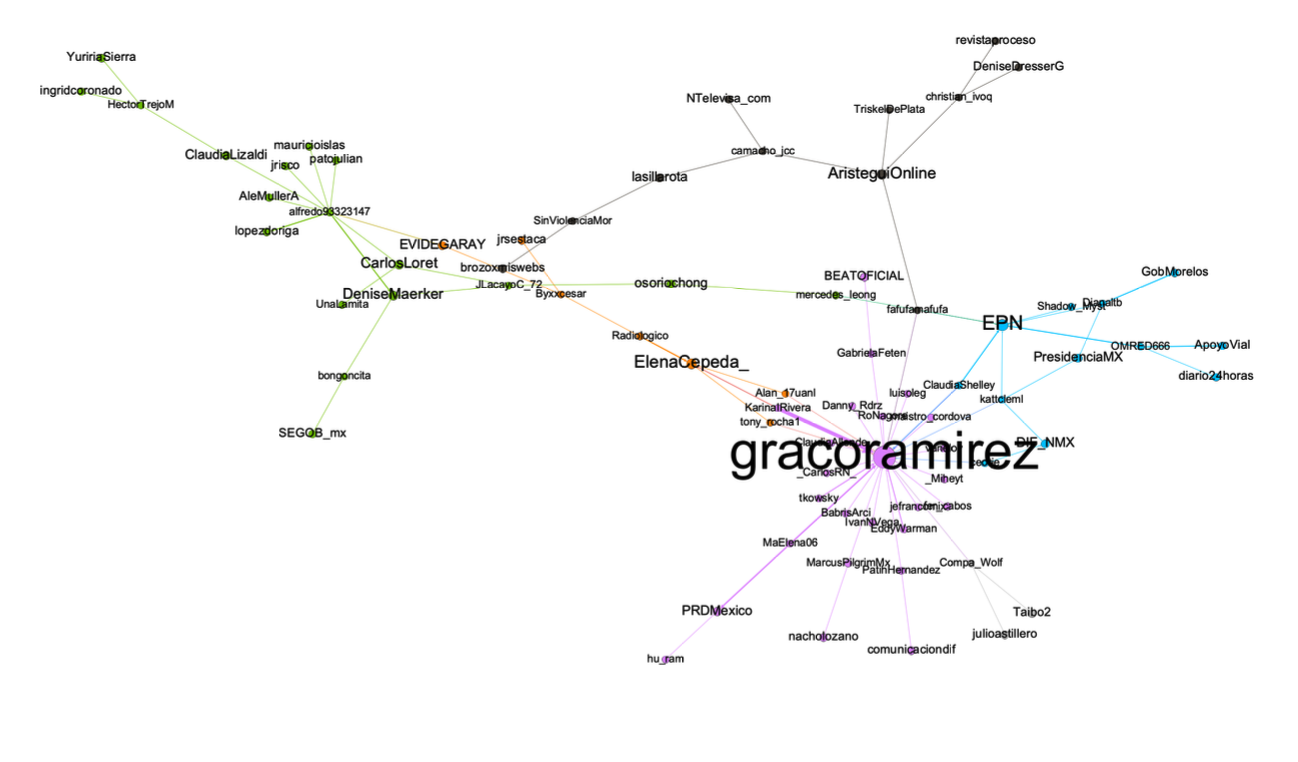
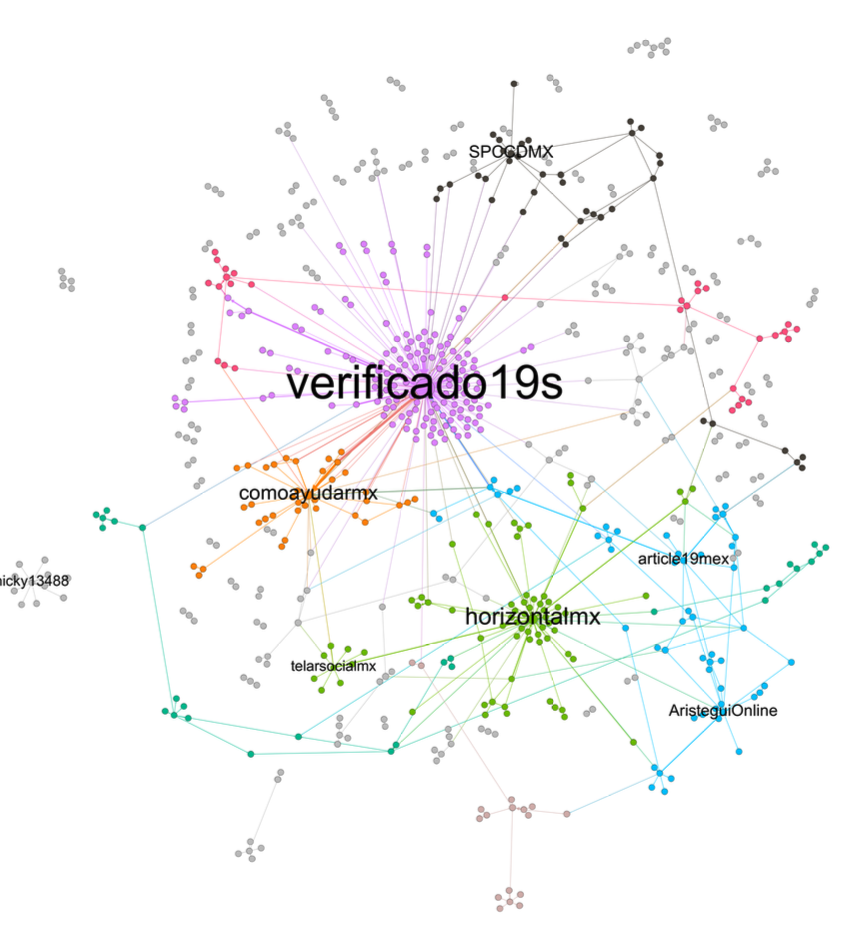
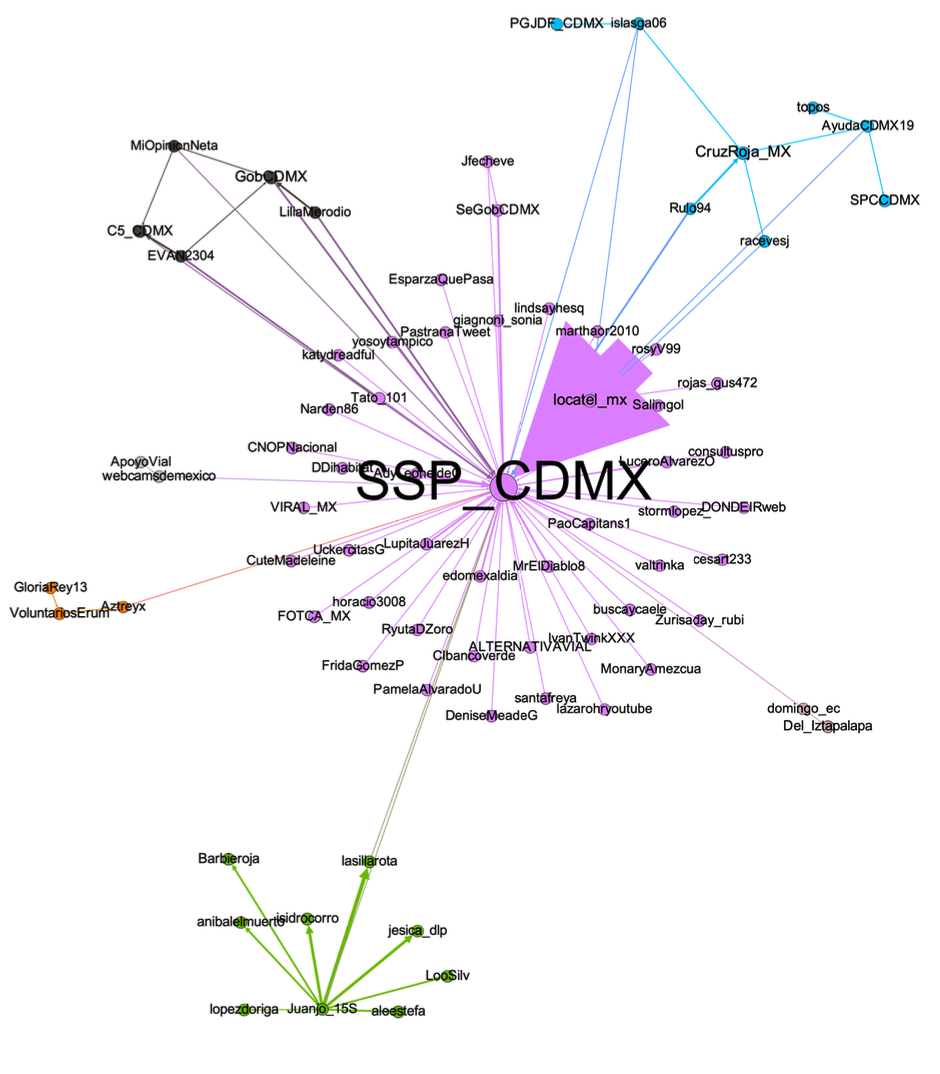
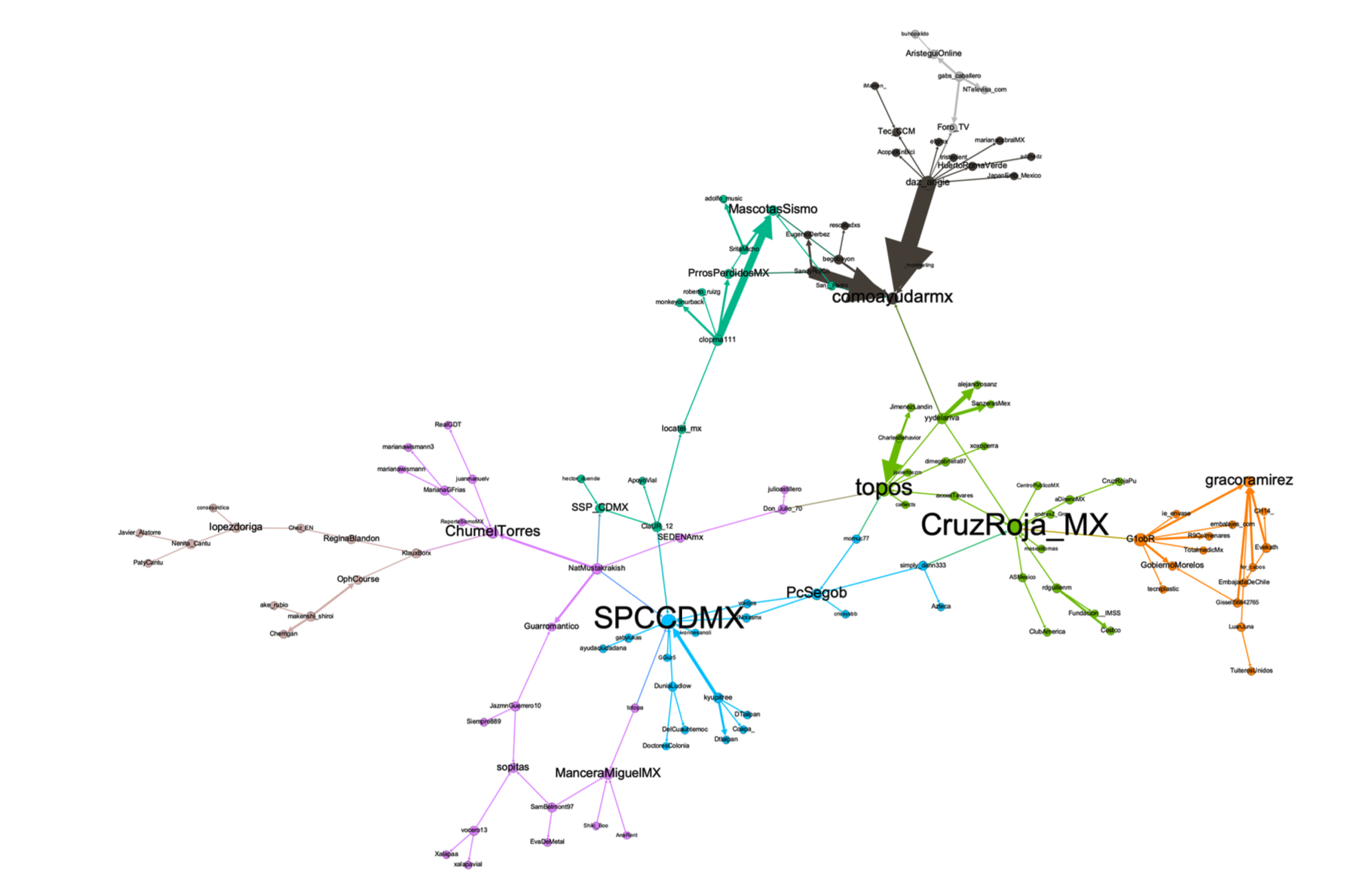
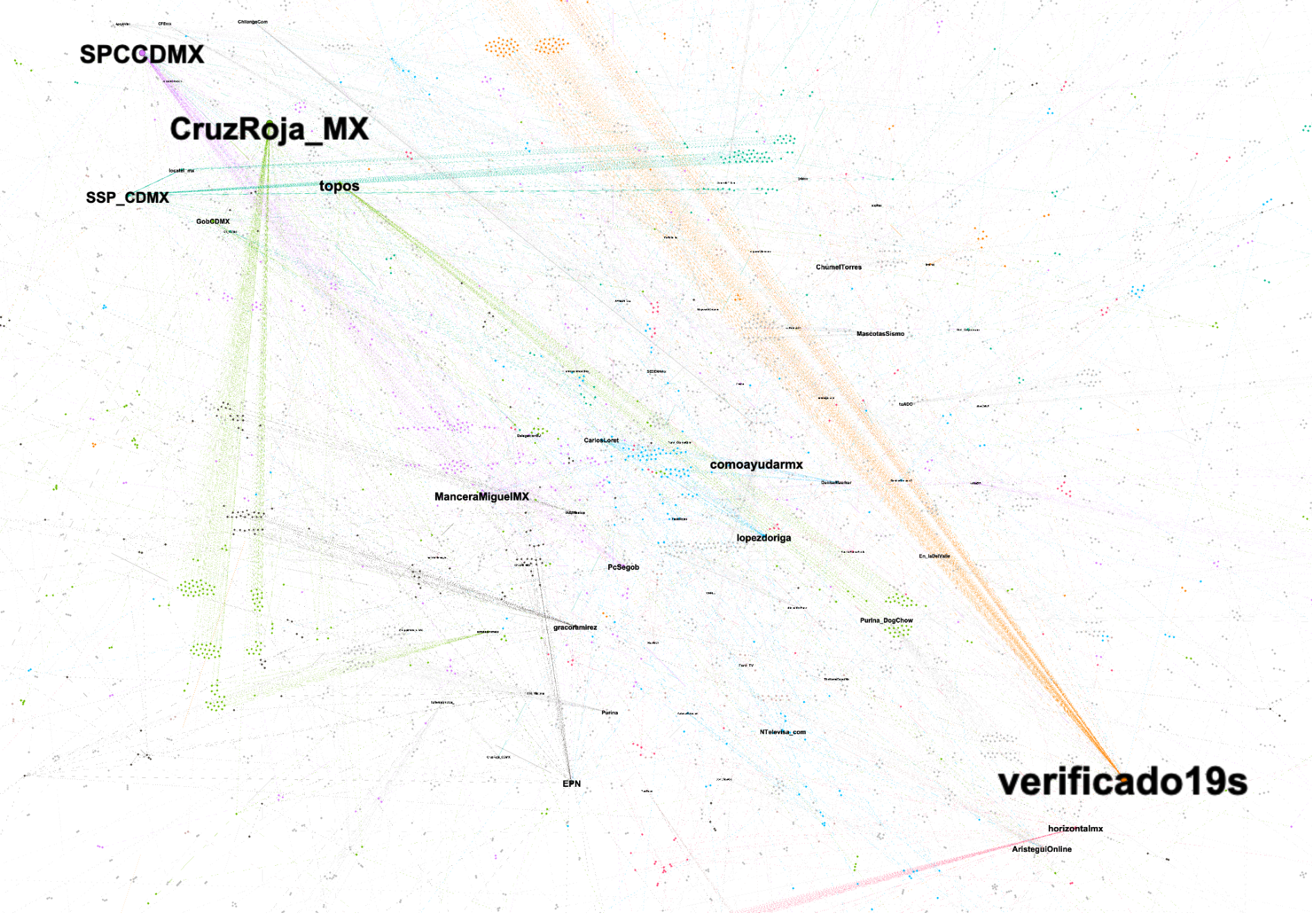
Key Findings from Social Network Analysis (SNA) By mining data from the first 72 hours of the disaster, I identified critical interaction patterns:
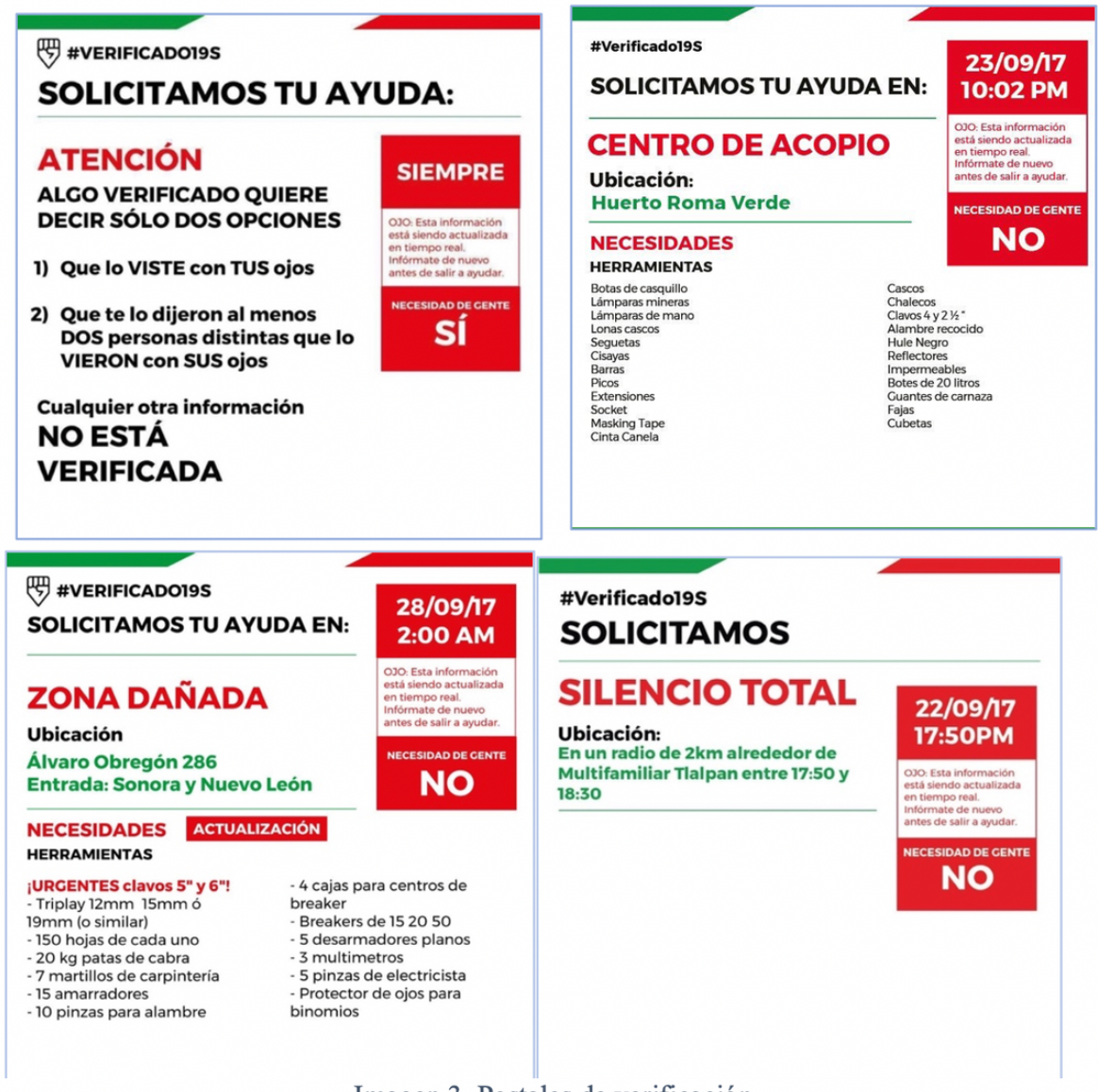
#Verificado19S: Emerged as the most significant node in terms of mentions, functioning as a collective intelligence system detached from government nodes.
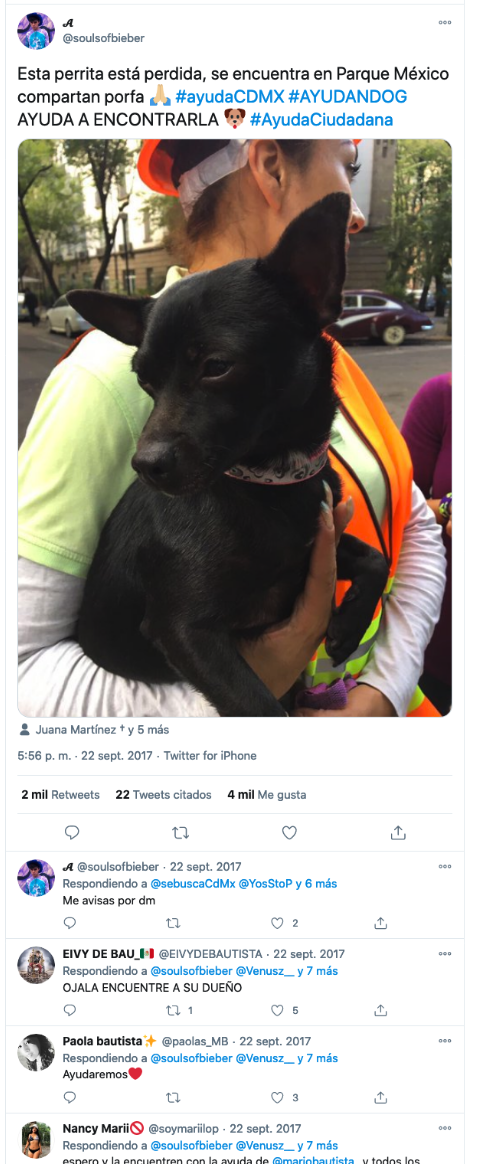
Constant Actors: Accounts like
@MascotasSismoand@ComoAyudarwere active throughout the entire emergency, even before larger groups consolidated.Trust Intermediaries: Journalists and "influencers" acted as critical bridges, amplifying distress calls to massive audiences.
The Role of Authority: While institutions like the Red Cross and Civil Protection were frequently mentioned, their capacity for two-way interaction within the network was limited.
Technical Skills & Tools
Data Analysis: Data mining and processing using Python 3 and trends analysis with Trendsmap.
Network Visualization: Creating directed graphs and modularity calculations with Gephi 9.2.
Methodology: Application of Synthetic Microanalysis and complex network theory.