Social Media and Emotions Analysis
Project Overview
This data science project investigates the complex relationship between daily social media usage time, dominant emotional states, and key demographic variables (Age, Gender, Platform). The primary goal is to determine whether social media usage time is significantly influenced by the emotion a user reports and to identify unique usage patterns across demographic groups.
Key Findings
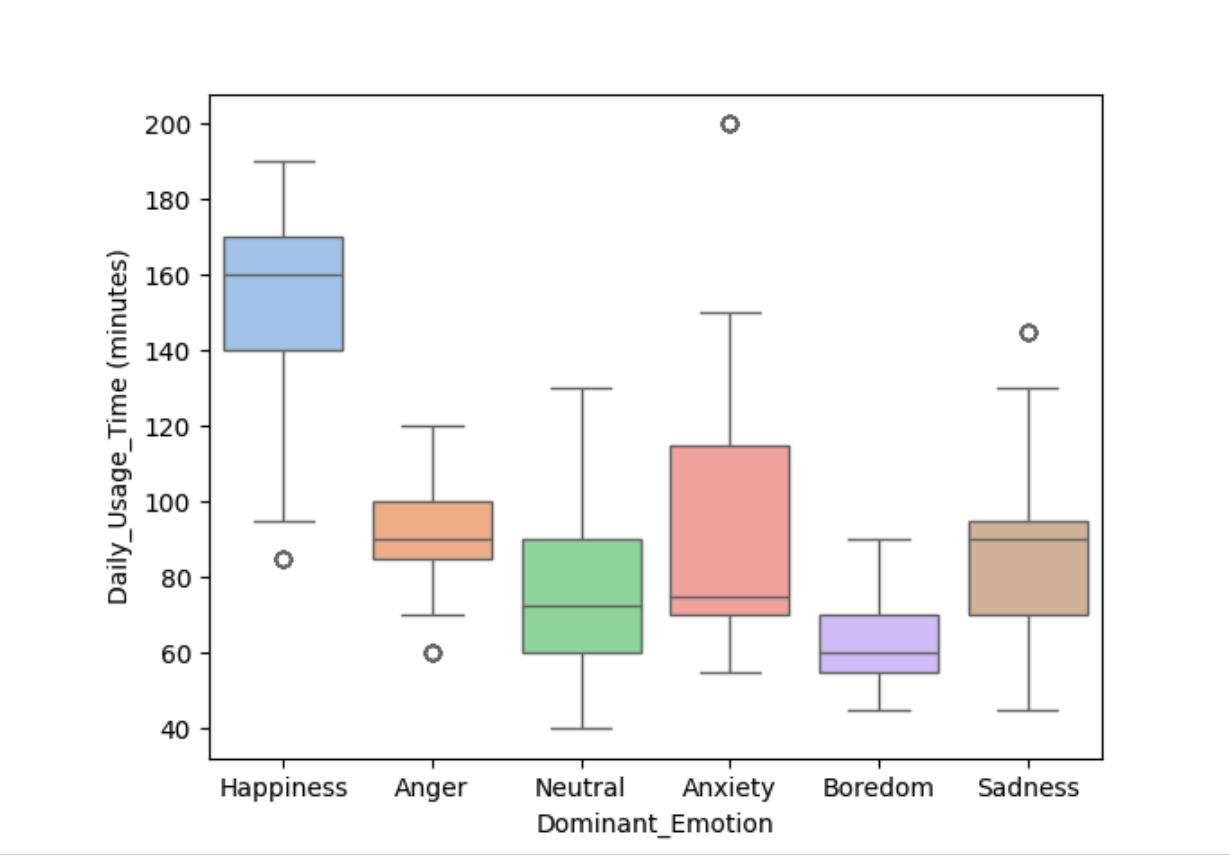
Statistical Significance (ANOVA): The analysis confirmed that the differences in daily usage time among users reporting different dominant emotions (Happiness, Anxiety, Boredom, etc.) are statistically highly significant (P≪0.05).
High Usage = High Emotion: Users reporting Happiness and Anxiety have the highest median daily usage times, suggesting that high-energy emotional states drive longer engagement.
Anxiety Outliers: The data revealed a critical finding: a small but distinct subpopulation of users reporting Anxiety engages in exceptionally long periods of use, indicating a potential area of concern for user well-being.
Gender Differences: Female users show a higher reported count for Happiness, while male users spend more time on the platform when reporting Boredom.