Smart City Governance and Infrastructure Analysis (2025)
Project Overview
Key Findings
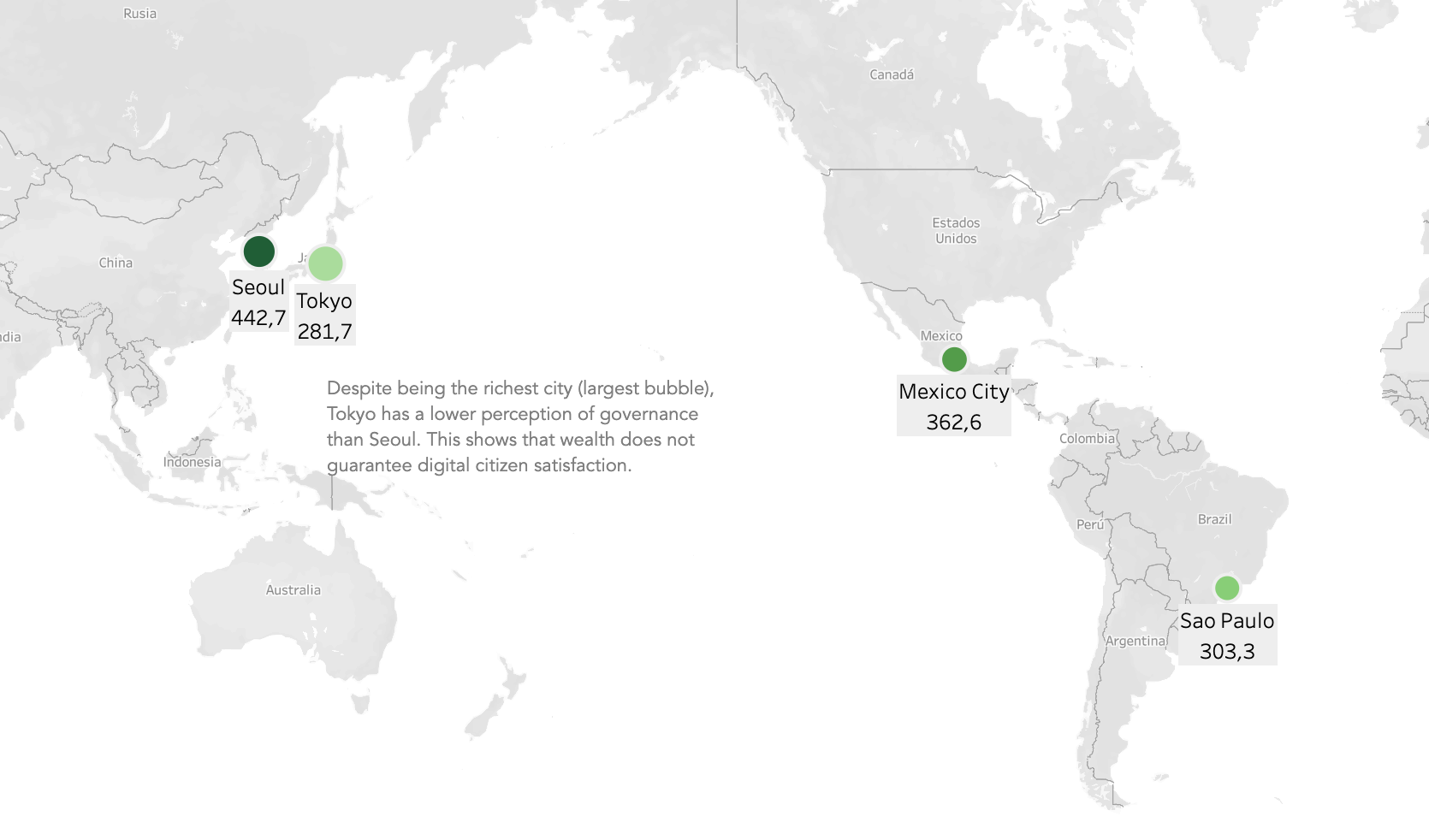
This project analyzes the relationship between digital infrastructure (Internet Speed, Wi-Fi Access Points), economic prosperity (GDP Per Capita), and citizen perception of governance across four key global cities: Tokyo, Seoul, Mexico City, and São Paulo.
The analysis utilizes a comparative approach to challenge the assumption that a city's wealth or internet speed automatically translates into higher citizen satisfaction with 'smart' government solutions.
Correlation Challenge: Found no strong linear correlation between a city's average Internet Speed or the quantity of Free Wi-Fi Hotspots and its citizens' perception of smart governance.
The Governance Paradox: The wealthiest city (Tokyo) did not yield the highest citizen satisfaction scores, demonstrating that economic capacity does not guarantee perceived governance success.
Targeted Impact: Mexico City and São Paulo, despite lower economic metrics, showed significant perceived improvement in specific governance areas (e.g., citizen participation platforms), highlighting the importance of strategically focused technological implementation.
Seoul's Model: Seoul emerged as the leader, successfully aligning its economic prosperity with high citizen satisfaction across most governance metrics, particularly in efficiency and digital participation.